
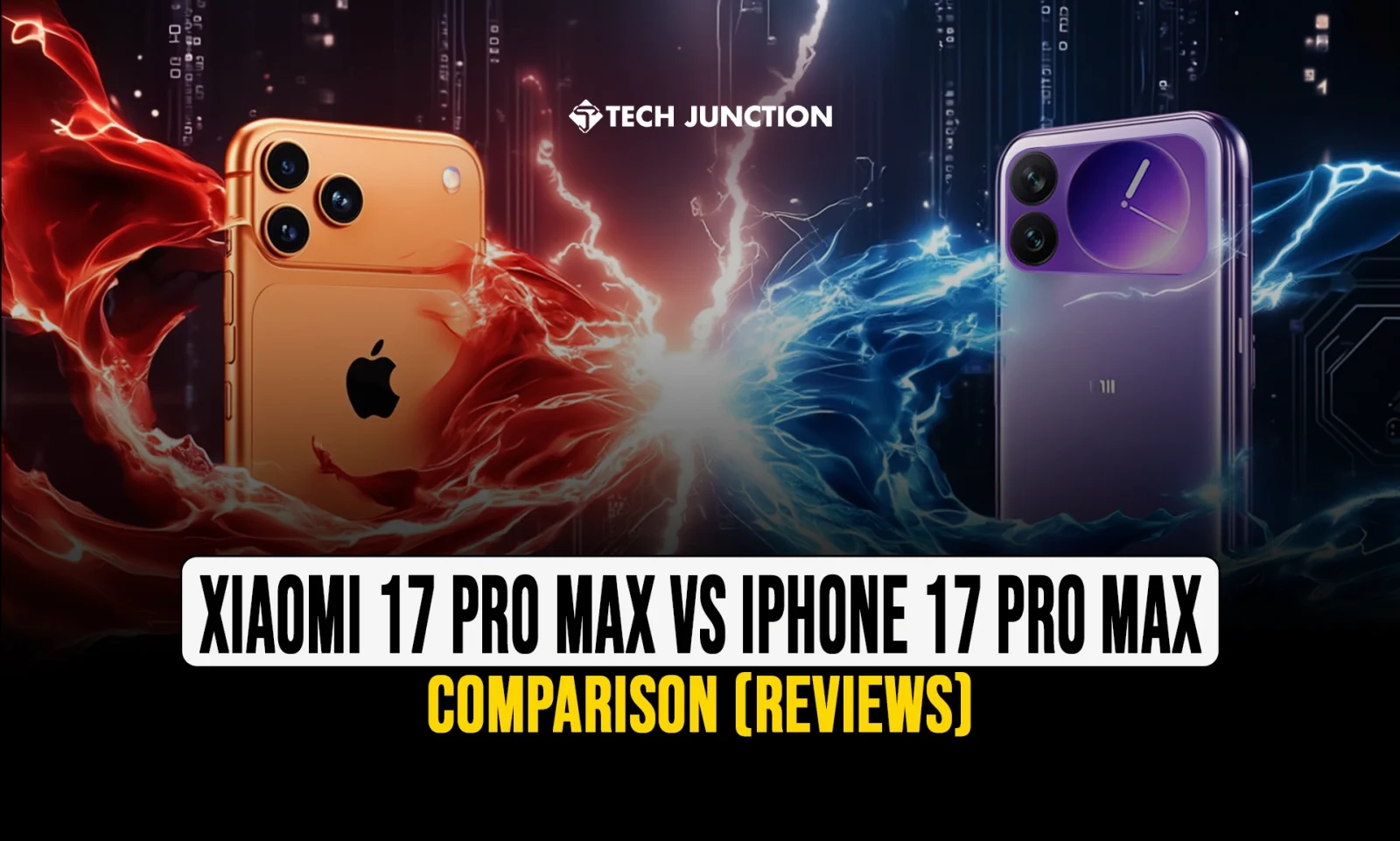
Two flagship phones battle for supremacy. The Xiaomi 17 Pro Max is a high-end Android flagship, while the iPhone 17 Pro Max is Apple’s premium iOS offering. Both phones debuted in late 2025, bringing top-tier specs and unique features. This Xiaomi 17 Pro Max vs iPhone 17 Pro Max comparison highlights differences in design, performance, camera quality, and battery life to help you decide which device fits you best.
Design and Build Quality
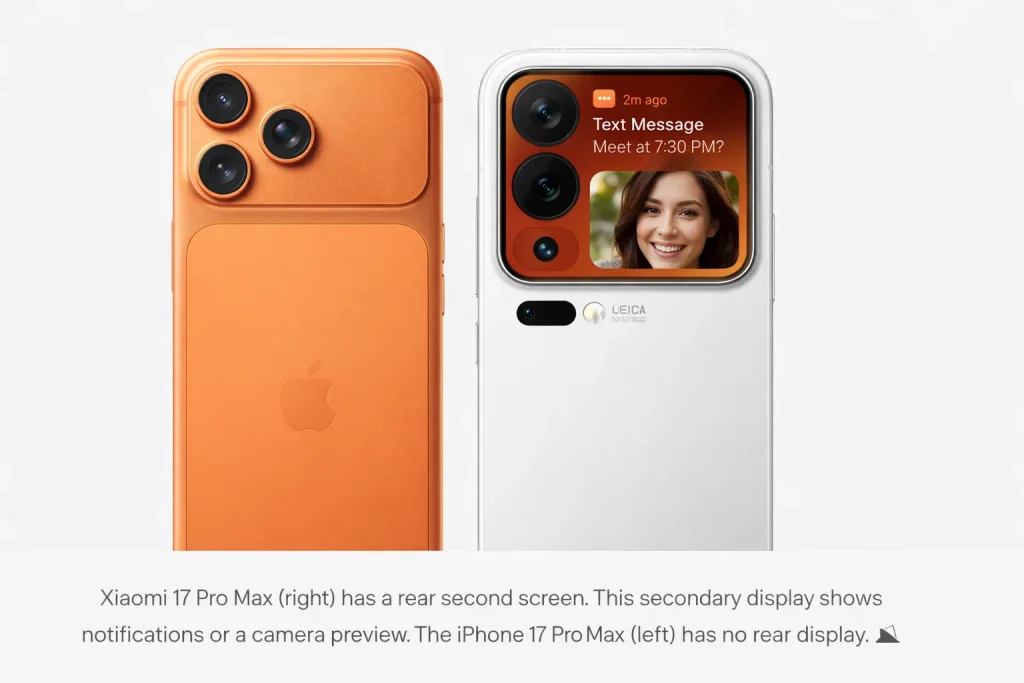
Xiaomi 17 Pro Max (right) has a rear second screen. This secondary display shows notifications or a camera preview. The iPhone 17 Pro Max (left) has no rear display. It sticks with a standard camera bump.
Both phones have premium build quality. Xiaomi uses glass on the front and back. Its frame is aluminum. It has an IP68 rating for water and dust resistance. The iPhone 17 Pro Max is also IP68 certified. Apple uses an aluminum unibody design. The front and back are protected by Ceramic Shield glass.
The Xiaomi 17 Pro Max is slightly smaller and lighter. Its dimensions are 162.9 × 77.6 × 8 mm. It weighs 219 g. The iPhone 17 Pro Max is larger. Its dimensions are 163.4 × 78.0 × 8.75 mm. It is heavier at 233 g. Apple’s design is optimized to manage heat. It uses a vapor cooling chamber in the aluminum chassis. Both devices feel solid in hand.
Xiaomi’s style is bold yet refined. It uses a flat-frame design. It comes in Black, White, Purple, or Green. iPhone 17 Pro Max colors come in Silver, Cosmic Orange, or Deep Blue. Each phone’s design balances looks and function. Xiaomi’s secondary display is a standout feature. The iPhone emphasizes a sleek unibody and robust build.
Display Comparison
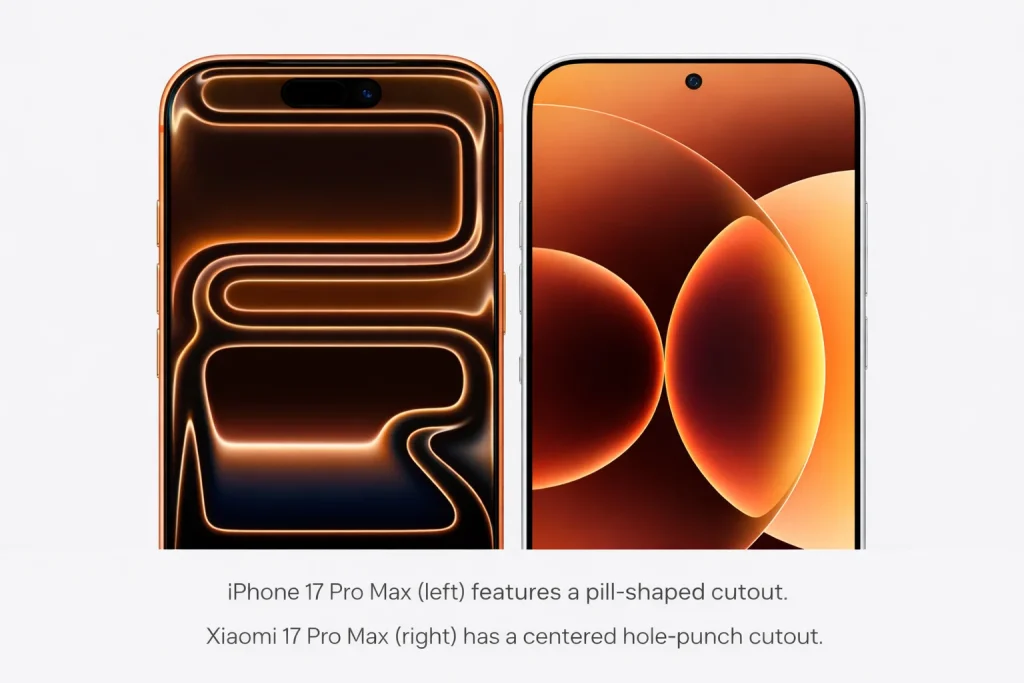
Xiaomi 17 Pro Max has a 6.9-inch AMOLED display. It supports a 120 Hz refresh rate. The screen supports HDR (Dolby Vision). It reaches 3500 nits peak brightness in sunlight.
The iPhone also has a 6.9-inch OLED display. It’s Apple’s Super Retina XDR panel. ProMotion allows variable refresh from 1 Hz to 120 Hz. It can reach 3000 nits peak brightness outdoors.
Both displays are sharp and vibrant. The iPhone’s resolution is 2868×1320 pixels (458 ppi). Xiaomi’s resolution is slightly lower at 2608×1220 (417 ppi). In everyday use, both screens look crisp with rich colors. The iPhone uses an anti-reflective coating to reduce glare. It also uses Apple’s True Tone for automatic color adjustment. Xiaomi’s panel has ultra-narrow bezels and an always-on mode.
There is no clear winner in display quality. Both phones provide large, immersive screens. Each screen’s 120 Hz refresh rate benefits gaming and video. Xiaomi’s higher peak brightness gives it an edge under sunlight. The iPhone’s contrast and color are tuned for great HDR. In the end, it’s a tie. Each flagship delivers a top-notch viewing experience.
Performance and Software
In performance, it’s Android vs iOS at the highest level. The Xiaomi runs on a Snapdragon 8 Gen 5 processor. This octa-core chip reaches up to 4.6 GHz speeds. The iPhone uses Apple’s A19 Pro chip. This custom processor is extremely fast and efficient. Both phones come with 12 GB of RAM. This ensures smooth multitasking even with many apps open.
Software experiences differ greatly. iPhone 17 Pro Max runs iOS 26. It provides Apple’s seamless ecosystem integration and long-term software support. Xiaomi 17 Pro Max runs Android 16 with MIUI enhancements. It offers deep customization in Android. Advanced features include split-screen multitasking and extensive personalization. Each platform has its fans. iOS offers polish and simplicity, while Android provides more flexibility.
In everyday use, both devices fly through apps and games. The A19 Pro gives iPhone a performance lead. It excels at heavy tasks and gaming. The Snapdragon 8 Gen 5 also delivers excellent performance. It supports 5G, Wi‑Fi 7, and Bluetooth 6. Thermals are managed well on both devices. Apple’s new cooling design prevents the iPhone from overheating. Xiaomi’s large chassis and cooling system also ensure stable performance.
Overall, neither phone shows any slowdowns. Both are truly flagship-grade performers.
Camera Comparison
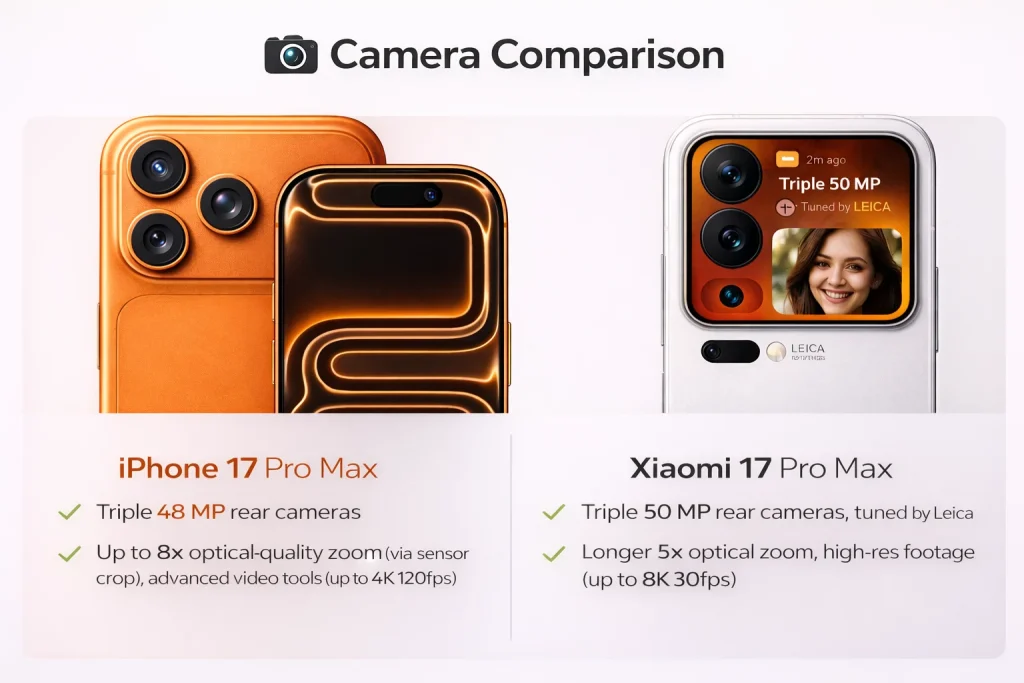
The camera is a key battleground between these phones. The iPhone has three rear cameras, each 48 MP. It uses 48 MP sensors for all three rear cameras. The telephoto offers 8× optical zoom via periscope design. Apple’s image processing contributes to great photos. The iPhone offers video tools like ProRes and Cinematic mode. These features make it a powerhouse for content creators. The front camera is 18 MP and enables Face ID. It also has autofocus for sharp selfies.
In the iPhone 17 Pro Max camera comparison, the Xiaomi 17 Pro Max also has three rear cameras. It has 50 MP sensors on all three rear cameras. The telephoto lens is periscope-style and offers 5× optical zoom. Xiaomi partners with Leica for camera tuning and pro modes. For selfies, Xiaomi equips a 50 MP front camera. This is higher than the iPhone’s 18 MP selfie camera.
In practice, the iPhone’s camera excels at video and consistency. It can record 4K video at up to 120 fps. The iPhone also offers advanced HDR video and superb stabilization. Xiaomi can record video up to 8K at 30 fps. It leverages its high-megapixel sensors for ultra-high-resolution footage.
Daylight photos from both phones are excellent. Xiaomi’s shots capture extra detail. It benefits from a larger camera sensor and Leica’s tuning. The iPhone produces very natural colors and balanced dynamic range. Apple’s image processing ensures consistency from shot to shot. Low-light performance is strong on both. Apple’s Night mode ensures bright, sharp low-light photos. Xiaomi’s night mode also produces excellent low-light shots.
Read More: iPhone 16 Pro Max vs Galaxy S24
Battery Life and Charging
Battery life is one area where Xiaomi pulls ahead. The Xiaomi 17 Pro Max battery life benefits from its large 7,500 mAh battery. This is far larger than the iPhone’s ~5,088 mAh battery. Xiaomi’s phone can last beyond a full day per charge. The iPhone 17 Pro Max still offers excellent endurance. Apple calls it the best battery life on any iPhone. They claim up to 39 hours of video playback.
Xiaomi’s battery advantage is clear in daily use. It will better serve users who need the longest-lasting phone.
Charging speeds further differentiate these phones. Xiaomi supports 100 W wired fast charging. It reaches a full charge in about 30 minutes. It also supports 50 W wireless charging. You can charge other gadgets with its reverse wireless charging. The iPhone now supports faster charging than prior models. Even so, it remains slower to charge than Xiaomi. The iPhone supports up to 40 W wired charging. It also supports 25 W wireless charging via MagSafe.
In 20 minutes, the iPhone hits about 50% charge. A full charge still takes longer than Xiaomi’s system. Both phones comfortably last through a normal day of use. Power users will appreciate Xiaomi’s extra battery cushion. After heavy use, Xiaomi still tends to last until bedtime. The iPhone is efficient, but it has a smaller battery. For pure battery and charging priorities, Xiaomi wins.
Price Comparison and Value
Xiaomi undercuts Apple’s flagship significantly on price. The Xiaomi 17 Pro Max price is about €720 . The iPhone 17 Pro Max starts at $1,199 for 256GB. Higher storage configurations cost more. The 2TB version runs about $1,999.
This gap highlights a major difference in value. Xiaomi offers a top-tier phone at a substantially lower cost. It will appeal to budget-conscious power users. You get high-end specs without the high price. Apple offers a polished iOS experience and strong brand appeal. These factors help justify its premium price. It also offers high resale value.
For U.S. customers, the iPhone is readily available on carriers. The Xiaomi might be harder to find in the U.S. Importing a Xiaomi is possible. However, lack of US support could be a concern.
In bang-for-buck terms, Xiaomi delivers more hardware for the money. iPhone buyers often pay more for the Apple ecosystem. They also value the long-term software support of iPhones. Both phones are expensive. However, Xiaomi’s aggressive pricing undercuts its rival. If value is the priority, Xiaomi clearly wins.
Should I Buy iPhone 17 Pro Max or Xiaomi 17 Pro Max?
In this Xiaomi vs iPhone comparison, choosing between the two comes down to your priorities. Both are superb flagship phones. However, they cater to slightly different audiences.
Pick the iPhone if you already use Apple devices. It offers a secure user experience and excellent camera consistency. Features like Face ID add to its appeal. It also integrates seamlessly with other Apple products. It “just works” with your other Apple devices. This makes it a safe premium choice.
Choose Xiaomi if you value Android’s flexibility. It provides maximum specs for the dollar. It offers excellent hardware and battery performance. Yet it comes at a much lower price. The camera setup is very versatile. The huge battery is ideal for travel or heavy use.
Both phones live up to their Pro Max name. The iPhone excels in software polish and ecosystem integration. It offers a more balanced overall experience. The Xiaomi wins on specs, battery, and value. Ultimately, your choice depends on which ecosystem you prefer. Consider which features matter most to you before deciding. You’ll be getting a top smartphone of 2025 either way.
The Tech Junction is the ultimate hub for all things technology. Whether you’re a tech enthusiast or simply curious about the ever-evolving world of technology, this is your go-to portal.