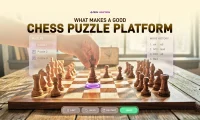

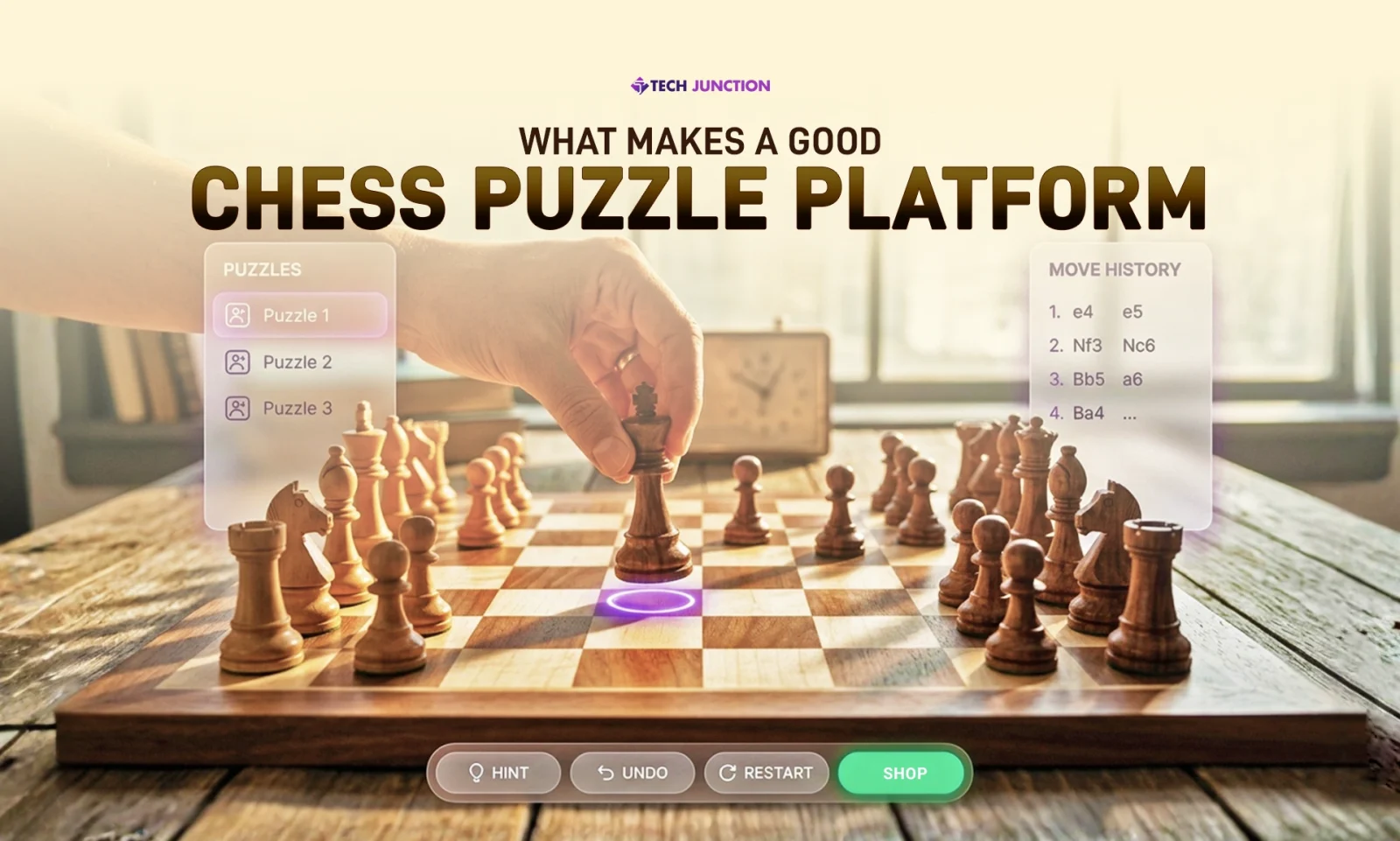
A weak puzzle platform can make a player feel productive while teaching very little. A strong one does the opposite. It exposes gaps, punishes lazy calculation, and helps tactical ideas carry over into real games. From a grandmaster’s point of view, that is the standard that matters. A chess puzzle platform is not good because it is addictive, fast, or full of features. It is good if it sharpens a player’s practical decision-making under realistic conditions.
This distinction matters because many online players confuse puzzle success with chess improvement. They solve combinations quickly, build a respectable puzzle rating, and then continue missing ordinary tactics in their own games. The reason is simple. Puzzle skill and game skill overlap, but they are not identical. A useful platform understands that and is built to close the gap rather than decorate it.
That is why players should judge a puzzle platform with more seriousness than most people do. It should train recognition, calculation, and discipline, but it should also connect those skills to actual play. Some modern tools do that better than others. Players who want puzzle work to sit inside a broader improvement process often look for services such as Endgame online chess, where training can stay connected to review instead of turning into isolated repetition. The value of a platform begins there – not in the number of positions, but in the quality of the learning loop.
The Best Puzzle Platforms Teach Calculation, Not Guessing
The first test of a puzzle platform is whether it rewards real calculation. Too many systems train impulse. The player sees a check, a capture, or a familiar sacrifice and moves immediately. If the answer happens to be right, the platform reinforces shallow habits. That is dangerous because real games do not forgive incomplete thinking so easily.
A grandmaster wants a puzzle platform to force the user to verify lines properly. The player should be trained to ask what the opponent’s best defense is, whether the apparent tactic truly works, and what changes after the first forcing move. This is where a good platform separates itself from a flashy one. It encourages disciplined thought instead of reflex alone.
This point matters especially for club players. Many of them do see tactical ideas, but they stop one move too early. They notice the motif, yet fail to calculate the defense. A sound platform should improve that weakness by making the full line matter. It should not merely congratulate the player for spotting the first move in a familiar pattern.
That is also why difficulty selection matters. If every puzzle is too easy, the player never learns to calculate. If every puzzle is too hard, the player starts guessing. A good platform keeps the user near the edge of genuine competence, where calculation is stretched but not broken. That balance is one of the clearest marks of quality.
Related: Timeless Wooden Puzzles
A Good Platform Connects Puzzles to Real Chess Mistakes
The biggest problem with puzzle training is isolation. A player solves tactical positions every day and still loses games because the same patterns do not appear at the right moment in practical play. A good puzzle platform should reduce that disconnect. It should help the user understand why a tactical theme matters and where it tends to arise in actual games.
This is where many puzzle systems fall short. They treat tactics as self-contained entertainment. Stronger platforms treat tactics as part of overall chess education. If a player repeatedly misses back-rank tactics, overloaded defenders, discovered attacks, or intermediate moves in personal games, the platform should make it easy to return to those exact themes. That creates training continuity, and continuity is where real progress usually begins.
The same principle applies at every level. Public attention around players such as Hans Niemann often focuses on results and controversy, but no strong player reaches top events by solving random positions without structure. High-level tactical sharpness is built from repeated contact with motifs that actually matter in competitive games. Ordinary players need the same logic, only in a simpler form.
A practical platform should therefore help the user do more than chase a puzzle number. It should support the broader question: which tactical ideas keep costing points, and how can they be fixed efficiently? Many players now prefer environments that combine chess puzzles online with review and training feedback for that reason. If the puzzle platform cannot support that connection, its long-term value is limited, no matter how large the database may be.
Puzzle Design That Improves Pattern Recognition and Difficulty
Not all puzzles are equally useful. Some are elegant but too artificial, while others are technically correct yet so strange that they teach little about practical chess. A good platform focuses on positions with clear educational value. The user should repeatedly encounter themes that appear in ordinary online and over-the-board games, not only spectacular combinations that rarely occur outside puzzle collections.
A grandmaster usually prefers puzzle sets that combine clarity with realism. The best motifs are not always the flashiest ones. Loose pieces, weak back ranks, trapped queens, exposed kings, tactical overload, removal of the defender, and quiet winning moves decide a huge number of real games. A good platform emphasizes these themes often enough that they become natural to the eye.
This is also where progression matters. A serious platform should not throw random complexity at the user. It should build from stable motifs toward harder, mixed positions where the tactical idea is less obvious. That progression mirrors real improvement. First, the player learns to recognize direct patterns. Then, the player learns to detect them in noisier, less cooperative positions.
A useful platform often shows its quality through small details:
- the positions feel relevant to practical play rather than composed for display
- the difficulty curve develops recognition first and deeper calculation afterward
These details matter because tactical improvement is cumulative. The player should feel that one week of work supports the next, rather than scattering attention across unrelated ideas.
The Best Platforms Make Review Easy and Training Sustainable
A puzzle platform is only as good as the routine it supports. If it encourages frantic sessions, endless guessing, or mindless streak-chasing, it may still be entertaining, but it will not reliably improve chess. A good platform should make disciplined training easier to maintain. That usually means clear sessions, sensible feedback, and enough structure that the user can return the next day without confusion.
Sustainability matters more than many players realize. Tactical sharpness improves through repeated contact, not through occasional marathons. A platform should therefore help players train in short, focused blocks with full concentration. It should be easy to stop after useful work rather than being dragged into quantity for its own sake. Strong players know that once calculation becomes tired, the educational value drops quickly.
Review also matters. A good puzzle platform should not simply mark right and wrong. It should make it easy to understand why the tactic worked, what defensive resource failed, and whether the same idea has appeared before. That is one reason many players eventually prefer a broader chess training platform over a puzzle-only product. They want training to sit inside a complete system of play, review, and correction.
Players looking for that kind of structure often check it out when they want puzzle work to support game improvement rather than remain a separate habit.
A Good Puzzle Platform Improves Practical Strength, Not Just Puzzle Rating
In the end, the only serious test is transfer. Does the player begin spotting more tactics in actual games? Does calculation become calmer and more reliable? Does the player stop inventing combinations that do not work and start recognizing the ones that do? If the answer is yes, then the platform is doing its job.
A grandmaster would never judge a puzzle platform by interface alone or by how many problems it contains. He would judge it by the habits it builds. Does it reward patience? Does it sharpen the eye for forcing moves? Does it make the player less careless in live positions? Those are the standards that matter because they translate into points.
A good chess puzzle platform, then, is not one that merely keeps the player busy. It is one that improves the player’s tactical honesty. It teaches the user to calculate before moving, to recognize recurring motifs, and to connect puzzle work with the mistakes that appear in serious games. When those conditions are present, puzzle training becomes more than a side activity. It becomes a dependable part of chess improvement.
The Tech Junction is the ultimate hub for all things technology. Whether you’re a tech enthusiast or simply curious about the ever-evolving world of technology, this is your go-to portal.