
Just two years in, and we already have the new Wi-Fi news in our feed. The WiFi 7 was released in 2024, and it is faster than most people will ever need. So why is the industry already working on Wi-Fi 8? That’s because it was never really the problem.
Think about it, you definitely had moments when your internet speed is just fine, but that Zoom call still looks choppy. Or, your Smart TV starts buffering when things get interesting. That’s not the speed problem; it’s the network reliability problem. And that’s exactly what Wi-Fi 8 is coming to deal with.
What is Wi-Fi8 8 Exactly?
Wi-Fi 8 is the next big upgrade to the wireless broadband network we all use. The official technical name it got is: IEEE 802.11bn, but the industry that names these things for us will call it WiFi 8. For the first time in history, the latest WiFi standard is built with reliability, not just speed.
By the numbers, Wi-Fi 8 aims to deliver according to official sources:
- 25% better performance when your signal is weak, or your home is full of interference
- 25% less lag in the worst-case moments — not just on average
- 25% fewer dropped packets when you move around with your device
The Core Features of the Latest WiFi 8
We’re not going to explain to you the Wi-Fi 8 features from an engineer’s perspective. We’ll put it simply, here’s how this new technology will change your daily life:
WiFi 8 Router Won’t Mess with Others
Currently, if you have multiple routers or access points at home or office, they mostly operate independently, and sometimes they get in each other’s way. And this would lead to those annoying problems: packet loss in online games, latency spikes, slow downloads and whatnot.
This is addressed with this new technology, which will allow access points to work as a team, sharing information about who’s connected where, adjusting signal strength dynamically and avoiding situations where two access points accidentally interfere with each other. In early tests, this alone improved the WiFi 8 speeds by 15-59% in busy environments.
Walking Between Rooms Won’t Affect Your Connection
Ever been on a call and felt a drop when you walked from one room to another? That happens because your device is switching between access points. Right now, that handoff is clumsy. WiFi 8 introduces a smarter handoff system where your device’s connection details, specifically its memory, are passed between the access points in advance. This means you can walk around freely without worrying about losing your connection.
Bad Signals Get a Second Chance
Wi-Fi 8 borrows a clever trick from mobile networks: instead of throwing away a signal that didn’t arrive perfectly, it saves the fragments and combines them with the next attempt to reconstruct the full message. It’s like piecing together a torn letter instead of throwing it in the bin and waiting for a new one.
Who Actually Benefits from WiFi?
Everyone will benefit from this new invention. However, some people will notice the difference more than others:
- Gamers and VR users: Lag in gaming or virtual reality isn’t just annoying, it’s disorienting. Wi-Fi 8’s improvements to worst-case latency make immersive experiences feel genuinely smooth
- Remote workers: More stable video calls, fewer “you’re breaking up” moments, even when other family members are streaming at the same time
- Smart home enthusiasts: Dozens of connected devices will all get more reliable connections without fighting over bandwidth
- Businesses: Warehouses, hospitals, offices, and schools where reliable wireless is critical (not just fast) will see the biggest gains
- Public spaces: Airports, stadiums, and shopping centres where hundreds of people connect at once will finally deliver the consistent experience they promise
When Can You Actually Get It – WiFi 8 Release Date
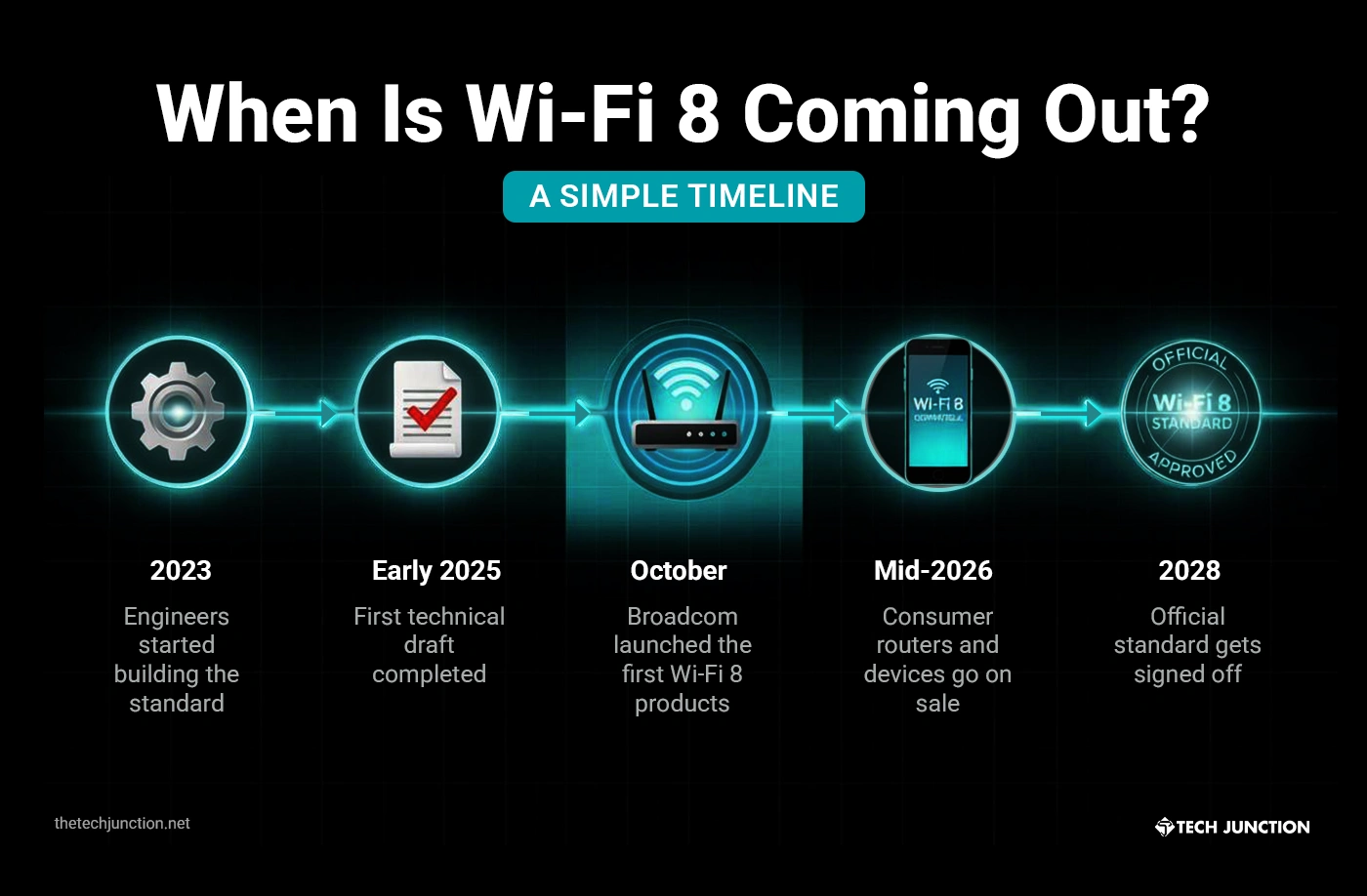
The first Wi-Fi routers in your preferred company, like TP Link WiFi and others, are expected to hit the shelves in mid 2026. That’s when regular consumers will be able to buy and use it. The official Wi-Fi 8 standard won’t be fully finalized until 2028, but that’s just paperwork. The same thing happened with Wi-Fi 6 and Wi-Fi 7. Devices came out years before the official stamp of approval, and they worked perfectly fine.
Should you wait for Wi-Fi 8 before buying a router?
Whether you should wait or not just depends on your current situation. Here are some scenarios that can help you decide.
Scenario 1: Let’s say your current router is 3+ years old, and at this stage, you’re probably losing a lot. For these users, upgrading to Wi-Fi 6 or 7 now would be a good choice.
Scenario 2: If you just bought a new router, you’re also good to go because Wi-Fi 7 is also a new technology and will most likely fulfill your needs.
Scenario 3: If you’re setting up a new home or office, we’d suggest waiting for Wi-Fi 8 because it’s not far off. Through this, you’ll upgrade to new technology without worrying about selling the Wi-Fi 7 at a low price because, of course, the prices will drop after the release.
The Bottom Line
Every Wi-Fi generation from the past 25 years has asked the same question: how do we make it faster? Wi-Fi 8 asks a different question: how do we make it work, every time, and for everyone? This focus is what’s making the headlines in cellular network news. For anyone who cares so much about those little drops in the call or experienced a game lag during an intense moment, this upgrade will likely solve everything for everyone. Everyone experienced faster; now it’s time for reliability.
FAQs
1. What is Wi-Fi 8, in plain English?
Wi-Fi 8 is the upcoming Wi-Fi Alliance generation based on IEEE 802.11bn, built around ultra-high reliability rather than headline speed jumps.
2. Why is Wi-Fi 8 focusing on reliability instead of raw speed?
Because modern Wi-Fi is already fast on paper, the bigger real-world pain is unstable connections, congestion, roaming hiccups, and inconsistent latency.
3. What will Wi-Fi 8 improve for normal users day to day?
Expect fewer dropouts, smoother roaming between access points, and more consistent performance in crowded homes, offices, and public venues.
4. Does Wi-Fi 8 mean I’ll get much faster internet speeds?
Not necessarily, since Wi-Fi 8 is widely described as prioritizing stability and efficiency gains over big peak-speed increases compared to Wi-Fi 7.
5. When will Wi-Fi 8 routers and devices actually show up?
It’s still in development, with certification and broader rollout commonly expected around 2028, so early gear may appear near that window.
The Tech Junction is the ultimate hub for all things technology. Whether you’re a tech enthusiast or simply curious about the ever-evolving world of technology, this is your go-to portal.