
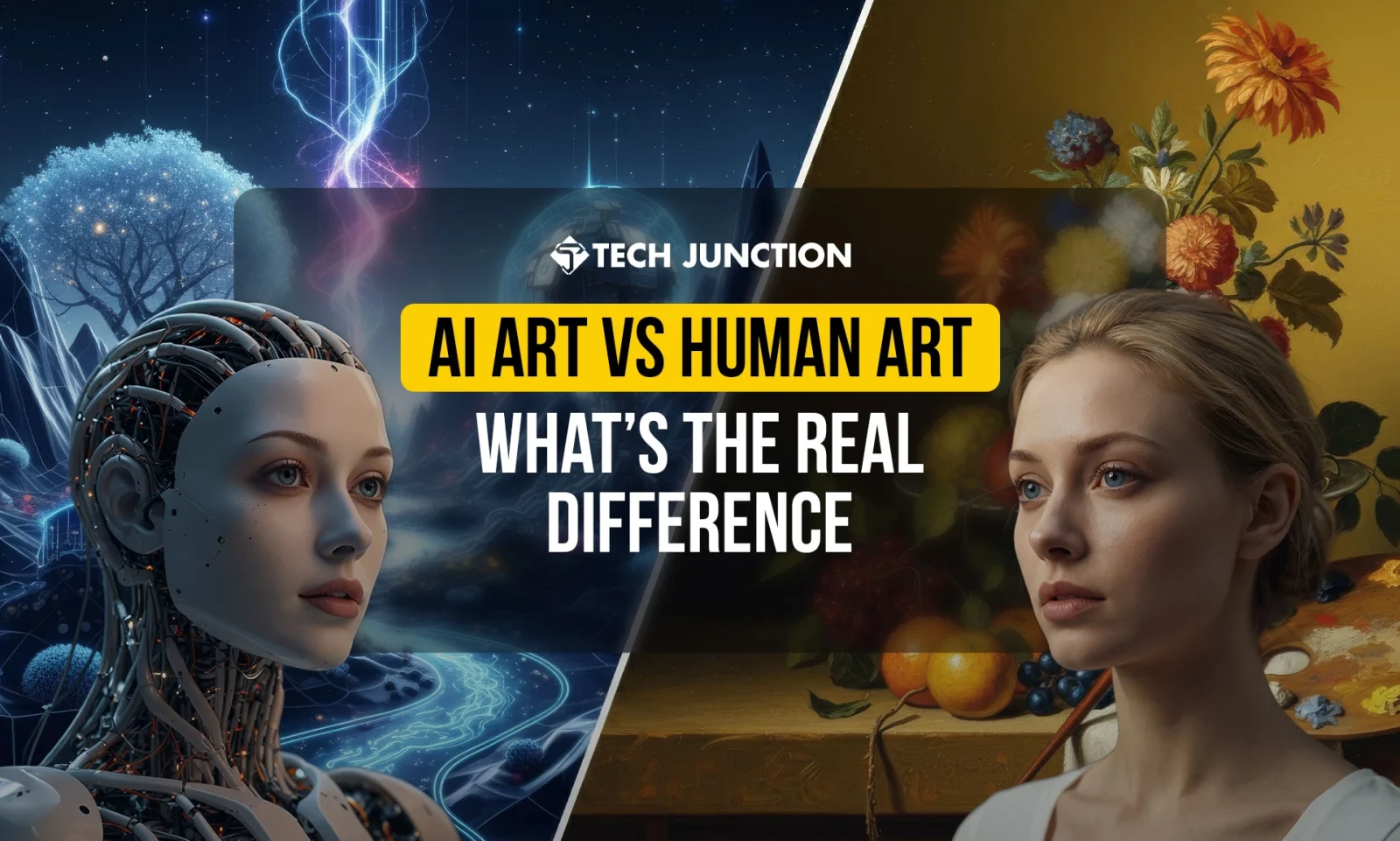
AI art vs human art is a new debate on the internet. There are countless AI-art generator tools out there that are mass-producing this every day and making it common. According to the latest stats, Generative AI reached 15 billion images in about 1.5 years, a feat that took traditional photography roughly 149 years to achieve. Your Instagram feed, those ads you scroll past, album covers, even the artwork your designer friend swears they made themselves. Some of it looks incredible, and honestly? You probably can’t tell the difference half the time until you pause and pay attention to the details. The AI art discussion isn’t new, but it’s getting louder.
People want to know what separates AI-generated art from real art, and it’s not just artists asking anymore. Collectors, brands, everyday viewers, everyone’s trying to figure out what they’re actually looking at. Because let’s face it, when a machine can create something that looks just as polished as a human-made piece, things get confusing.
We have done the homework for you and broken down the key differences in a practical way. Read on to uncover them.
What Is AI Art?
AI art relies on AI algorithms and vast datasets to understand what humans are looking for. You type in a prompt, and the system processes it. Simply put, it’s a collaboration between human ideas and machine creativity.
But does it actually create the image as humans do? No. It’s focused on your prompt, it doesn’t have the capability to add depth or emotions into the art because it doesn’t get meaning, emotion, or context.
What Is Human Art?
Human art comes from lived experience, emotions, and actual intent. Whether it’s traditional or digital, it reflects personal perspective, cultural background, and the creative struggle that went into making it.
Artists make impactful choices, which makes the art comparatively more meaningful than AI-generated art. They decide: what to actually include in the frame, how to convey a specific meaning or feeling. Human art might not always look “perfect,” but it has the uniqueness that AI can’t nail, not yet, at least.
Human Art Vs AI Art: 5 Key Differences Explained Imperfect Details
The artist vs AI debate isn’t just about philosophy, it comes down to what you can actually see when you look at the work. Here are the key differences that’ll help you spot whether you’re looking at AI art vs real art.
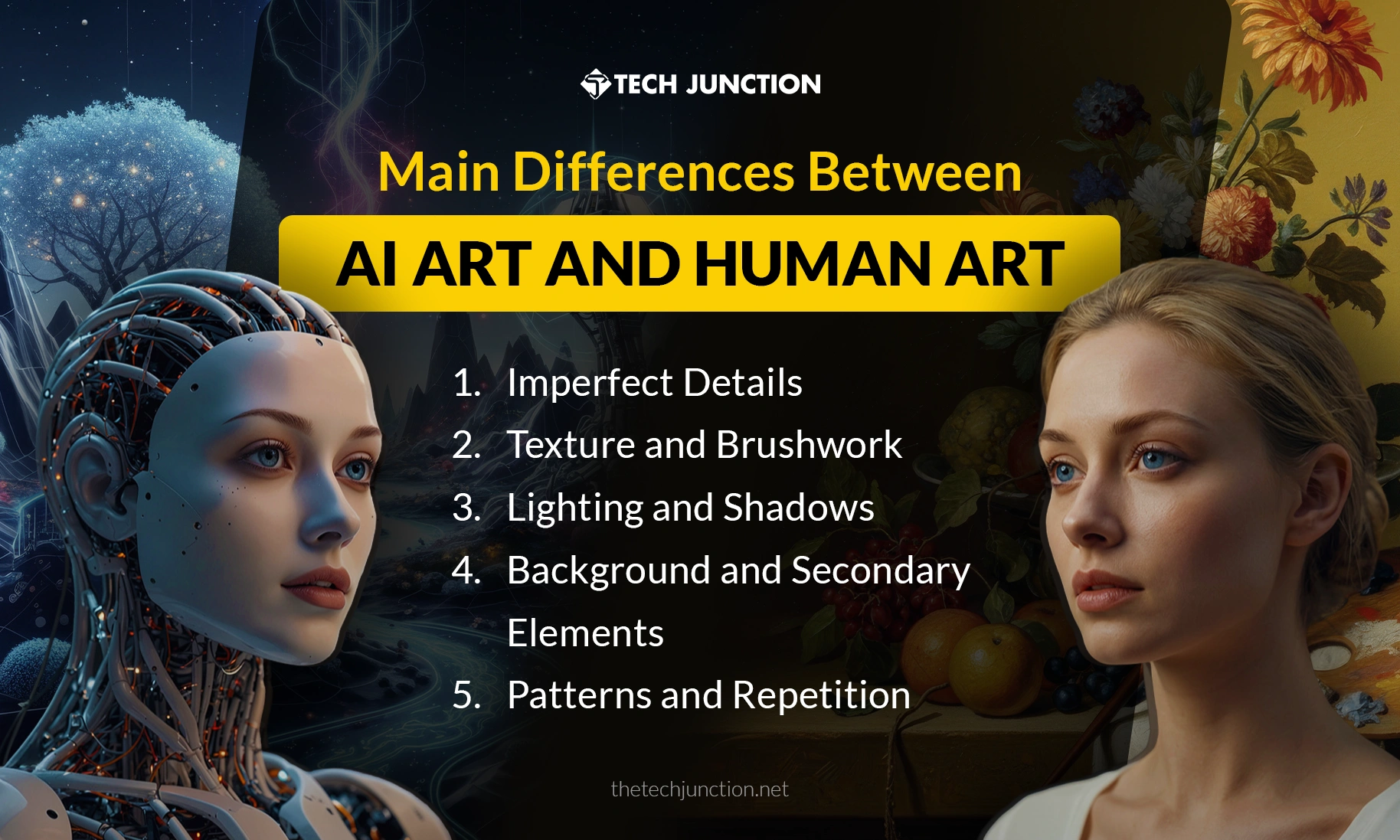
1. Imperfect Details
This is one of the easiest ways to catch AI-generated work if you look closely enough.
AI Art: Hands are a mess—extra fingers, missing fingers, fingers that don’t bend right. Facial features might look a bit off-center, and anatomy feels weird in ways that don’t make sense. These errors pop up randomly, not like they were meant to be there.
Human Art: Even when the anatomy isn’t perfect, the mistakes usually match the artist’s style or skill level. Imperfections feel intentional or at least expressive.
If details feel randomly wrong instead of stylistically wrong, you’re probably looking at AI.
2. Texture and Brushwork
Texture tells you a lot about how something was made.
AI Art: Everything looks too smooth, almost airbrushed or plastic-like. Brush strokes might be there, but they feel fake or just repeat the same pattern over and over.
Human Art: You can see pressure changes, direction shifts, layering, and unevenness. Textures feel like you could almost touch them.
If the whole image is polished with zero variation, that’s a red flag.
3. Lighting and Shadows
Lighting mistakes are subtle, but once you notice them, they’re hard to ignore.
AI Art: Light sources don’t match up. Shadows go in different directions, reflections are off, or the lighting looks dramatic but makes no physical sense.
Human Art: Even when lighting is stylized, it usually follows some kind of logic. Shadows and highlights back up the scene.
AI goes for visual drama over accuracy, which is why AI art often has lighting that looks cool but feels wrong.
4. Background and Secondary Elements
Backgrounds are where AI really struggles.
AI Art: Secondary stuff gets blurry, distorted, or just nonsensical. Objects melt together or exist for no reason at all.
Human Art: Backgrounds support the subject and add to the story, even when they’re simplified or abstract.
If the background feels like an afterthought or looks chaotic compared to the main subject, that’s a common AI giveaway.
5. Patterns and Repetition
AI loves to repeat itself.
AI Art: You’ll see identical patterns, perfectly symmetrical elements, or cloned details, especially in hair, clothing, or buildings.
Human Art: Even when there’s repetition, there’s variation. Symmetrical designs still show slight differences because humans aren’t machines.
Perfect repetition? That’s usually algorithmic, not human effort.
AI Art Vs Human Art Comparison Table
Here’s a quick comparison table of both art types to help you understand better.
| Aspect | AI Art | Human Art |
|---|---|---|
| Detail accuracy | Inconsistent, random errors | Intentional or stylistic imperfections |
| Texture | Smooth, synthetic, repetitive | Organic, layered, varied |
| Lighting | Visually dramatic but illogical | Purposeful and coherent |
| Backgrounds | Blurred or nonsensical | Story-driven and intentional |
| Patterns | Identical repetition | Natural variation |
Why Is AI Art Bad?
AI art is a never-ending debate in the art world. In forums, social media, and other relevant platforms, the AI art controversy is always in the news. Creators argue about it, saying it undermines human creativity, exploits existing artists’ work, and raises questions about their originality and ownership. Some of the common concerns everyone comes across are:
Copyright and plagiarism: We all know that AI is trained on existing artworks on the internet, and this is without the permission of the owners.
Loss of artist’s livelihood: AI art is mass-produced every day, there are countless tools that are now flooding the artists’ market, and this reduces the income opportunities for human creators.
When to Use AI Art vs Human Art
Living in a time where everyone actually does use AI, we can’t really back off from using AI-generated art. At times, it helps us, so what matters more is learning when to actually use it.
When AI Art Makes Sense
AI art works when you need speed, scale, and room to experiment without breaking the budget. It’s great for:
- Ideas/Imaginations: When you have an idea and want to know how it would look.
- Brainstorming: You can generate relevant visuals for a topic to help your team understand your thoughts better.
- Low-stakes projects: The kind of art that doesn’t need emotional depth or a personal touch
Where Human Art Can’t Be Replaced
Human art is what you need when the work has to mean something. Here are some examples:
- Fine art: Art pieces meant to be displayed, collected, or appreciated for their creative value.
- Branding and identity: Branding elements like logos need to be unique and show consistency in every detail, which AI can’t do.
- Personal expression: Commissions, portraits, or anything tied to someone’s identity or story.
- Cultural or historical work: Art that reflects real experiences, traditions, or movements.
Final Verdict About AI Art Vs Human Art
Now we know how different these two art types look beneath the surface. The AI art examples we shared above will definitely help you next time when you see something that doesn’t convince you. Considering how fast AI is evolving, learning to look more closely will become the most valuable skill for anyone in the modern art world.
FAQs About Human Vs AI Art
1. Is AI art actually creative or just copied from existing work?
AI art just uses the data it has available to bring your idea to life but it lacks intention, emotion, or personal expression that humans have.
2. What is the biggest difference between AI art and human art?
Human art is felt, it has emotions, every added detail has a meaning, while AI art is driven by algorithms and probability.
3. Can AI art replace human artists in the future?
AI may replace certain production-heavy tasks, but it cannot replace the human need for meaning, storytelling, and cultural context.
4. Who owns the rights to AI-generated art?
Ownership depends on the tool, usage terms, and local laws, which are still evolving and far from universally settled.
5. Why do people react so strongly to AI-generated art?
Because AI art challenges long-held beliefs about creativity, originality, and what it means to be human.
The Tech Junction is the ultimate hub for all things technology. Whether you’re a tech enthusiast or simply curious about the ever-evolving world of technology, this is your go-to portal.